DIY Fire Pit Ideas Under $200
This post contains affiliate links. If you buy through them, we may earn a commission at no extra cost to you. As an Amazon Associate we earn from qualifying purchases. Learn more.
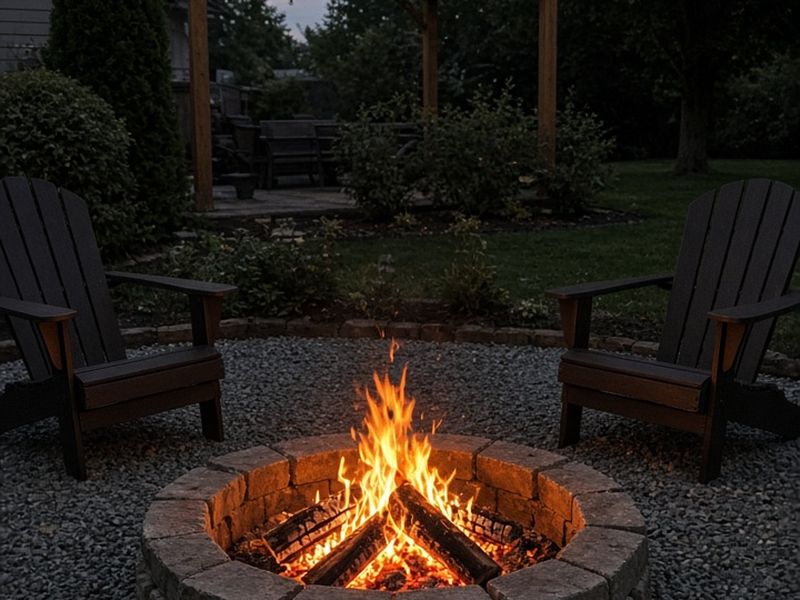
A fire pit is the easiest way to turn a backyard into a gathering place, and the most common version, a ring of retaining wall blocks around a steel insert, can be built in an afternoon. Here is how to choose a style, place it safely and build it right.
Check the rules before you dig
Fire rules vary widely by city and county. Before you build, look up your local open-burning rules, any burn-ban days, and HOA restrictions. Many places require a minimum distance from structures and property lines, often in the range of 10 to 25 feet, and some allow only gas fire features. Call your local fire department if the rules are unclear.
Also call 811 before digging so buried utility lines get marked. It is free in the United States.
Pick a style
- Block ring. Stackable retaining wall blocks around a steel ring insert. The insert protects the blocks from direct heat, which can crack ordinary concrete.
- In-ground pit. A shallow dug pit lined with fire brick and ringed with stone. It sits low, so it suits a gravel lounge.
- Steel bowl on pavers. The fastest option: set a freestanding bowl on a pad of pavers or gravel. Zero construction.
- Gas fire table. Cleaner and allowed in more places, though it costs more and needs propane or a gas line.
For most yards, the block ring offers the best mix of cost, looks and permanence.
How to build a block fire pit
- Mark a circle. Drive a stake at the center, tie a string to it, and spray-paint a circle slightly larger than your ring insert plus the block depth.
- Dig out 6 to 8 inches of soil inside the circle and under where the blocks will sit.
- Add 4 inches of paver base or crushed gravel, then tamp it firm and level. A level base is what keeps the walls straight.
- Lay the first course of blocks around the insert, checking level in every direction. Tap high blocks down with a rubber mallet.
- Stagger joints on the second and third courses like brickwork. Use masonry adhesive between courses for strength.
- Leave a few small gaps in the lowest course if you want air to feed the fire.
- Fill the bottom with 2 to 3 inches of gravel or lava rock for drainage.
Three courses is usually enough. Taller walls trap heat and make it hard to feel the warmth from a seat.
Create the gathering area
A fire pit is really about the circle of seating. Plan a ring at least 7 feet from the fire's edge to the back of the chairs so people can stand and move. Surround the pit with a gravel or paver pad about 12 to 16 feet across. Gravel is cheap, drains and resists stray embers far better than grass.
Classic Adirondack chairs lean back at the right angle for fire-gazing. A pergola nearby makes a great backdrop and a place to hang string lights, but keep any wood structure well clear of sparks and never put an open fire pit under a gazebo or pergola roof.
Safety habits
- Use a spark screen on windy nights.
- Burn only dry, seasoned firewood. Never use gasoline to start a fire.
- Keep a hose, bucket of water or extinguisher within reach.
- Use a long fire poker instead of hands or sticks.
- Drown the coals and stir them before leaving the fire. Ashes can stay hot for a long time.
- Supervise children and pets at all times.
Frequently asked questions
How big should a fire pit be? Interior diameters of about 36 to 44 inches suit most backyards. Larger pits use more wood and push seating farther away.
Can I use regular concrete blocks? Standard concrete can crack or spall with intense heat, which is why a steel ring insert or fire brick lining is recommended inside the blocks.
Is a fire pit allowed on a wooden deck? Open wood-burning pits on wood decks are a fire risk and are prohibited in many places. Consider a gas fire table rated for deck use with a heat shield, and check local rules.
What should go in the bottom? A few inches of gravel or lava rock helps drainage. Avoid river rock from wet areas, which can trap moisture and crack when heated.
Seating layout ideas
- Full circle of four to six chairs for conversation.
- Half circle facing a view, with the open side toward the yard.
- Built-in curved bench from the same retaining wall blocks, set at a safe distance.
- Mixed seating: two lounge chairs plus a long log or stone bench for extra guests.
Keep a small side table or tree stump near each chair for drinks so no one sets cups on the pit wall.
Keeping costs down
Buy blocks by the pallet only if you need a lot; most rings need 24 to 36 blocks. Look for overstock or slightly chipped blocks at home centers, reuse stones from elsewhere in the yard, and skip decorative caps until later. With smart choices, a sturdy block ring and gravel pad can come in under $200 in materials, though local prices vary.
A good fire pit is simple, safe and built on a level base. Get those three right and you will use it for years.
Shop the ideas
- Fire pit ring inserts on Amazon
- Retaining wall blocks on Amazon
- Lava rock on Amazon
- Spark screens on Amazon
- Adirondack chairs on Amazon
- Fire pit pokers on Amazon
Links go to Amazon search results so you can compare current options, prices and reviews yourself.
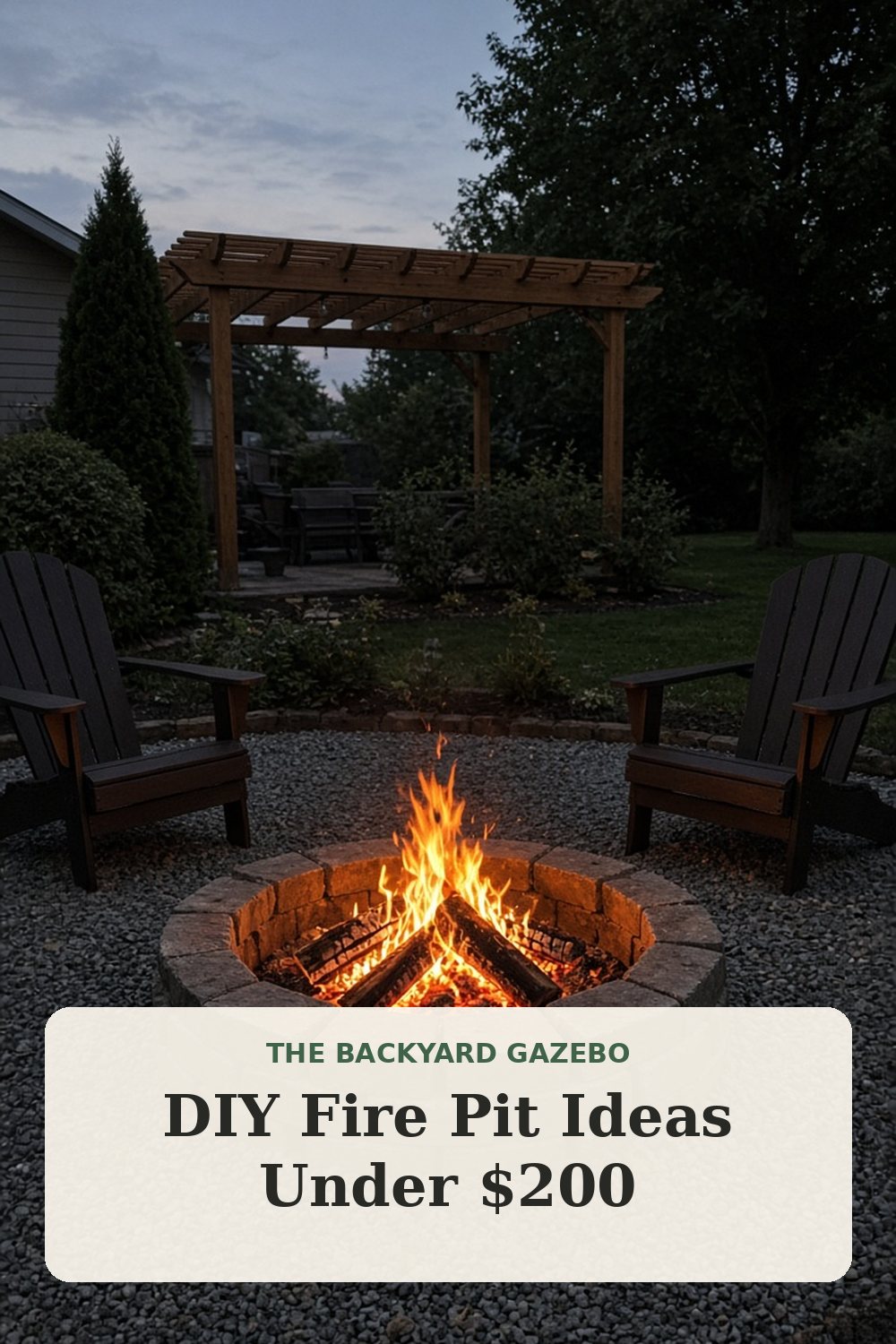
Save this idea to Pinterest.
More backyard ideas
- Florida Backyard Landscaping That Survives Summer
- Paver Patio Ideas for Beginners
- Screened Porch Makeover Ideas
Images: AI-generated illustrations created for The Backyard Gazebo.