Florida Backyard Landscaping That Survives Summer
This post contains affiliate links. If you buy through them, we may earn a commission at no extra cost to you. As an Amazon Associate we earn from qualifying purchases. Learn more.
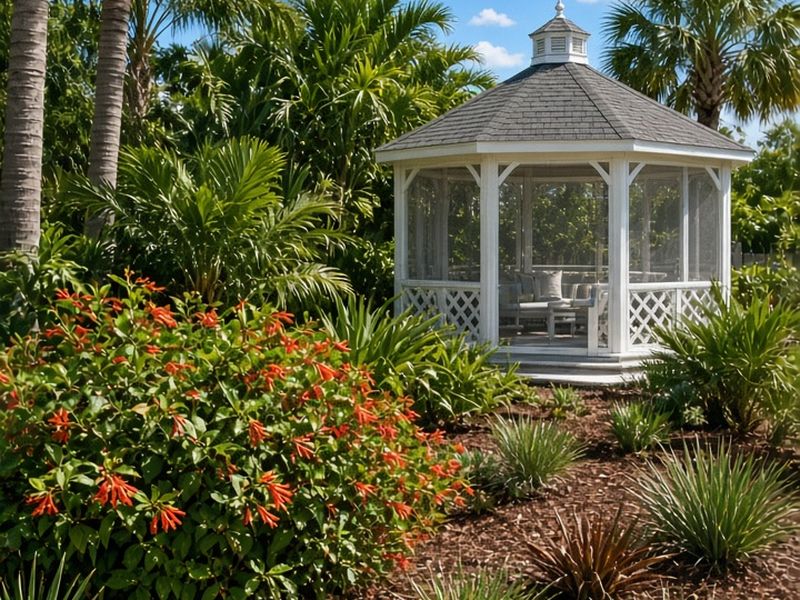
Florida yards face a unique gauntlet: intense sun, summer downpours, sandy soil, salt air near the coast, mosquitoes and hurricane season. The good news is that the right plants and layout make a Florida backyard nearly self-sustaining.
Follow Florida-Friendly principles
The University of Florida IFAS Florida-Friendly Landscaping program lays out nine principles that are worth following: right plant, right place; water efficiently; fertilize appropriately; mulch; attract wildlife; manage yard pests responsibly; recycle yard waste; reduce stormwater runoff; and protect the waterfront. You can read the full guide at ffl.ifas.ufl.edu.
In practice, that means choosing plants for your exact light and soil, grouping them by water needs, and shrinking the thirsty lawn to the area you actually use.
Know your zone
Florida spans several USDA hardiness zones, from roughly 8 in the Panhandle to 10 and 11 in South Florida. A plant that thrives in Miami may freeze in Tallahassee. Check your zone and your county extension office's plant lists before buying.
Heat-tough plants to consider
These are commonly recommended for much of Florida; confirm for your zone.
- Firebush, a native shrub with red-orange flowers that hummingbirds and butterflies love.
- Coontie, a low, tough native cycad for shady and dry spots.
- Muhly grass, with pink fall plumes and excellent drought tolerance.
- Simpson's stopper, a native shrub that makes a good informal hedge.
- Blue plumbago and lantana for long-blooming color (choose non-invasive lantana varieties).
- Saw palmetto and sabal palm for a native, storm-tolerant backbone.
Avoid species on Florida's invasive plant lists, which some big-box stores still sell.
Mulch, water and soil
Sandy soil drains fast and holds few nutrients, so mulch is essential. Spread 2 to 3 inches of mulch around plants, keeping it a few inches away from stems and trunks. Under beds where weeds are fierce, a breathable landscape fabric helps, though it is best left out of areas where you plan to divide or add plants.
Water deeply and less often. A drip irrigation kit delivers water to roots with little waste, and a hose timer makes it automatic. Most Florida water districts restrict landscape watering to set days, so check your county's schedule.
Design for storms and drainage
- Keep large trees and palms well away from the house and pick wind-tolerant species.
- Avoid loose gravel and lightweight decor near windows; it becomes projectiles in a hurricane.
- Grade beds so water flows away from the foundation, and consider a rain garden in the lowest spot.
- Choose furniture you can quickly store or tie down.
Make shade and escape the bugs
Afternoon sun can make a Florida yard unusable from May to October. A shade sail stretched between the house and a sturdy post blocks harsh light at low cost; take it down before a named storm.
For the best of both worlds, a screened gazebo gives you shade and a mosquito-free room. Place it where it catches the breeze, set it on pavers or a level gravel pad, and anchor it properly. Soft-top gazebos usually need their canopies removed in high wind.
Frequently asked questions
Is St. Augustine grass a good choice? It is common in Florida and tolerates shade better than many turfgrasses, but it needs regular water. Many homeowners keep a smaller patch for play and replace the rest with beds or groundcovers.
When is the best time to plant in Florida? Many gardeners plant at the start of the rainy season so nature does most of the watering, though fall planting also works well for many shrubs. Your county extension office can give local timing.
How do I deal with mosquitoes? Empty anything that holds standing water each week, keep gutters clear, and use a fan or a screened structure for seating. A breeze alone discourages mosquitoes.
Do I need fertilizer? Many Florida counties have seasonal restrictions on fertilizer to protect waterways. Check local rules and use slow-release products only when plants show a need.
A sample layout for a typical lot
- Front of the backyard by the house: a patio or screened gazebo for shade and dining.
- Middle: a small lawn or groundcover play area, with a gentle swale to carry rainwater away.
- Edges: deep mulched beds with a mix of native shrubs, palms and flowering perennials.
- Back corner: a rain garden or compost area, plus a shed or storage hidden by shrubs.
This structure keeps maintenance low, handles summer storms and leaves space to relax.
Quick wins
Mulch every bed, set a hose timer, and add one native flowering shrub this month. Those three steps cut watering and weeding right away.
A low-maintenance plan
Start with the bones: a shrunk lawn, wide mulched beds, a few native shrubs and one shaded sitting area. Add flowering plants in layers each season. In a year or two, a well-planned Florida backyard needs little more than occasional pruning and a fresh top-up of mulch.
Shop the ideas
- Landscape fabric on Amazon
- Drip irrigation kits on Amazon
- Mulch on Amazon
- Hose timers on Amazon
- Shade sails on Amazon
- Screened gazebos on Amazon
Links go to Amazon search results so you can compare current options, prices and reviews yourself.
Save this idea to Pinterest.
More backyard ideas
Images: AI-generated illustrations created for The Backyard Gazebo.