Freeze-Proof Your Vacation Rental: Leak and Temperature Sensors That Alert You Remotely
This post contains affiliate links. If you buy through them, we may earn a commission at no extra cost to you. As an Amazon Associate we earn from qualifying purchases. Learn more.
How we researched this: this is a research roundup based on manufacturer specifications and published reviews. We have not tested these products hands-on, and we do not list prices or ratings. Check the linked sources and current listings before you buy.
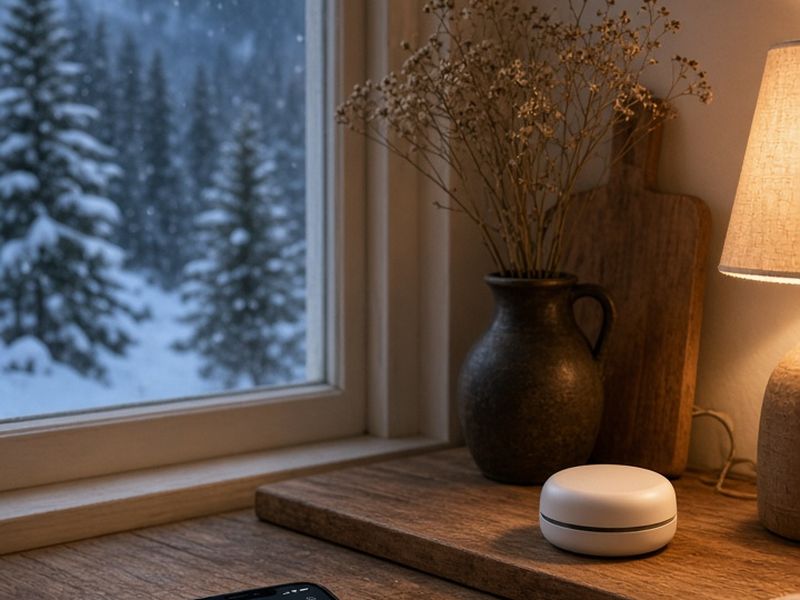
A vacation rental spends a lot of winter empty, and an empty house is where a frozen pipe or a slow leak does the most damage, because nobody is there to notice. Guests turn the heat off at checkout, a furnace quits on a Tuesday night, a supply line under the sink starts to drip. A few inexpensive sensors and the right alert settings turn those surprises into a text message you can act on. This guide covers which sensor types fit a rental, where to put them and how to set alerts so you have hours instead of minutes. It is a research roundup based on manufacturer listings, safety guidance and host discussions; we have not tested these products hands-on.
Why empty rentals need eyes in winter
The stakes are simple. State Farm's newsroom notes that a 1/8-inch crack in a pipe can spew up to 250 gallons of water a day, enough to cause flooding, structural damage and mold.
Hosts describe the same two failure modes again and again. In one thread, a host arrived to clean after guests left on a sub-zero day and found the guests had turned off the mini-splits; the pipes were frozen solid. In another, a host in a New England ski area said remote temperature monitoring showed them that their main heater had stopped working, and a second time that a guest had turned it off, early enough to switch on backup heat before the pipes froze.
The takeaway: you cannot stop every guest or every furnace from failing, but you can find out within minutes instead of at the next turnover.
Pick the right kind of sensor
There are two broad options.
- Wi-Fi sensors connect straight to the router, with no hub. The Temp Stick is a common choice for second homes: its listing describes text, email and app alerts with no subscription, plus alerts if it loses its internet connection. The Govee H5179 is a lower-cost Wi-Fi option, but its listing says out-of-range alerts are app notifications, and reviewers report mixed Wi-Fi reliability, so treat it as a secondary sensor.
- Hub-based long-range sensors talk to a small hub instead of your Wi-Fi. YoLink's listings say its sensors use a LoRa radio with long range, which helps in crawl spaces, garages and detached units where Wi-Fi is weak. The YoLink leak sensor kit includes the hub, and a YoLink temperature sensor can be added to the same hub. The hub still needs internet to reach your phone.
When we checked Amazon in November 2026, the Temp Stick showed 4.4 stars from nearly 4,000 ratings and the YoLink leak kit 4.6 stars from about 7,000 ratings. Ratings change, so check the current listing before you buy.
Every option depends on power and internet. If the router goes down, the sensors go quiet, so choose one that alerts you when a sensor goes offline.
Where to put them
Put sensors where the cold gets in and where water collects, not where guests sit.
- Under the kitchen sink, especially on an exterior wall.
- Next to the water heater and the washing machine.
- Behind toilets and under bathroom vanities.
- In the crawl space, unheated basement or garage where supply lines run.
- One sensor in the main living area, so you can see whether the heat is actually running.
Label every sensor by location in the app. A 2 a.m. alert that says "Kitchen sink" is far more useful than "Sensor 3".
Set alerts that give you time
The American Red Cross recommends leaving the heat on and set no lower than 55°F when you will be away in cold weather. Use that as your thermostat floor between stays, and set the low-temperature alert a few degrees below it. That way an alert means the heat has failed or been turned off, not that pipes are already freezing.
- Add a second recipient, such as a co-host, cleaner or nearby handyman, to every alert.
- Turn on offline and low-battery alerts as well as temperature alerts.
- Check the manual for the right batteries in unheated spaces.
- Test each leak sensor with a damp paper towel and confirm the alert reaches every phone.
Add leak sensors and a loud alarm
Temperature sensors warn you before a pipe freezes; leak sensors tell you the moment water is on the floor. The X-Sense leak detector kit lists 120 dB alarms on both the sensor and base plus app alerts, which helps when a guest is home and can turn off a valve. YoLink's Leak Sensor 1 is silent by design, according to its listing, so pair it with a siren or rely on phone alerts.
If you want the system to act on its own, smart automatic water shutoff valves can close the main line when a sensor trips. These usually need a plumber to install, so price that in.
Cover the outside and guide the guests
Outside, disconnect and drain hoses before the first hard freeze and put foam faucet covers on outdoor spigots, as AAA recommends for freeze prep.
Inside, the weak link is often the guest at the thermostat. Put a short note by it, and send the rule before arrival: please keep the heat on, and do not turn it off when you leave. Property management software can send that message automatically on every winter booking. Hospitable, for example, offers scheduled guest messaging for short-term rental hosts.
Finally, read your policy's rules on freeze damage and vacancy. Short-term rental insurers such as Proper Insurance can explain what they expect from hosts in winter.
Winter freeze-prep checklist
- Thermostat floor set at 55°F or higher between stays.
- Low-temperature alerts set a few degrees below that floor.
- Leak sensors under sinks, by the water heater and washer.
- Offline and low-battery alerts on; a backup contact added.
- Hoses disconnected; faucet covers on outdoor spigots.
- Main water shutoff located, labeled and shown to your cleaner.
- Pre-arrival message about the heat scheduled for every winter stay.
The takeaway: a few sensors in the right places, alerts set above freezing and a second person who gets every alert will catch most winter disasters while they are still small.
Shop the ideas
- Temp Stick remote Wi-Fi temperature and humidity sensor on Amazon
- Govee H5179 Wi-Fi thermometer hygrometer on Amazon
- YoLink Water Leak Sensor 1 kit (4 sensors + hub) on Amazon
- YoLink indoor temperature and humidity sensor (hub required) on Amazon
- X-Sense Wi-Fi water leak detector kit (3 sensors + base) on Amazon
- Frost King FC1 foam outdoor faucet covers (4-pack) on Amazon
Links go to specific Amazon product pages; check current price, availability and reviews before you buy.
Sources
- American Red Cross: preventing and thawing frozen pipes
- State Farm newsroom: winter chill can lead to big bills
- AAA: protect your home from frozen pipes
- Host discussion: frozen pipes after guests turned off the heat
- Host discussion: starting a rental in winter
- Host discussion: remote water leak and pipe freeze monitors
Save this idea to Pinterest.
Free host checklist
The Vacation Rental Turnover & Outdoor-Space Checklist: printable turnover, backyard, safety and seasonal checklists in one 6-page PDF.
Download the free PDF What's inside →More Host Gear
- Winter Patio Ideas for Vacation Rentals
- Best Smart Locks for Vacation Rentals
- Outdoor Security Cameras for Rental Hosts
Images: AI-generated inspiration images created for The Backyard Gazebo. They are not photos of a real property or product.